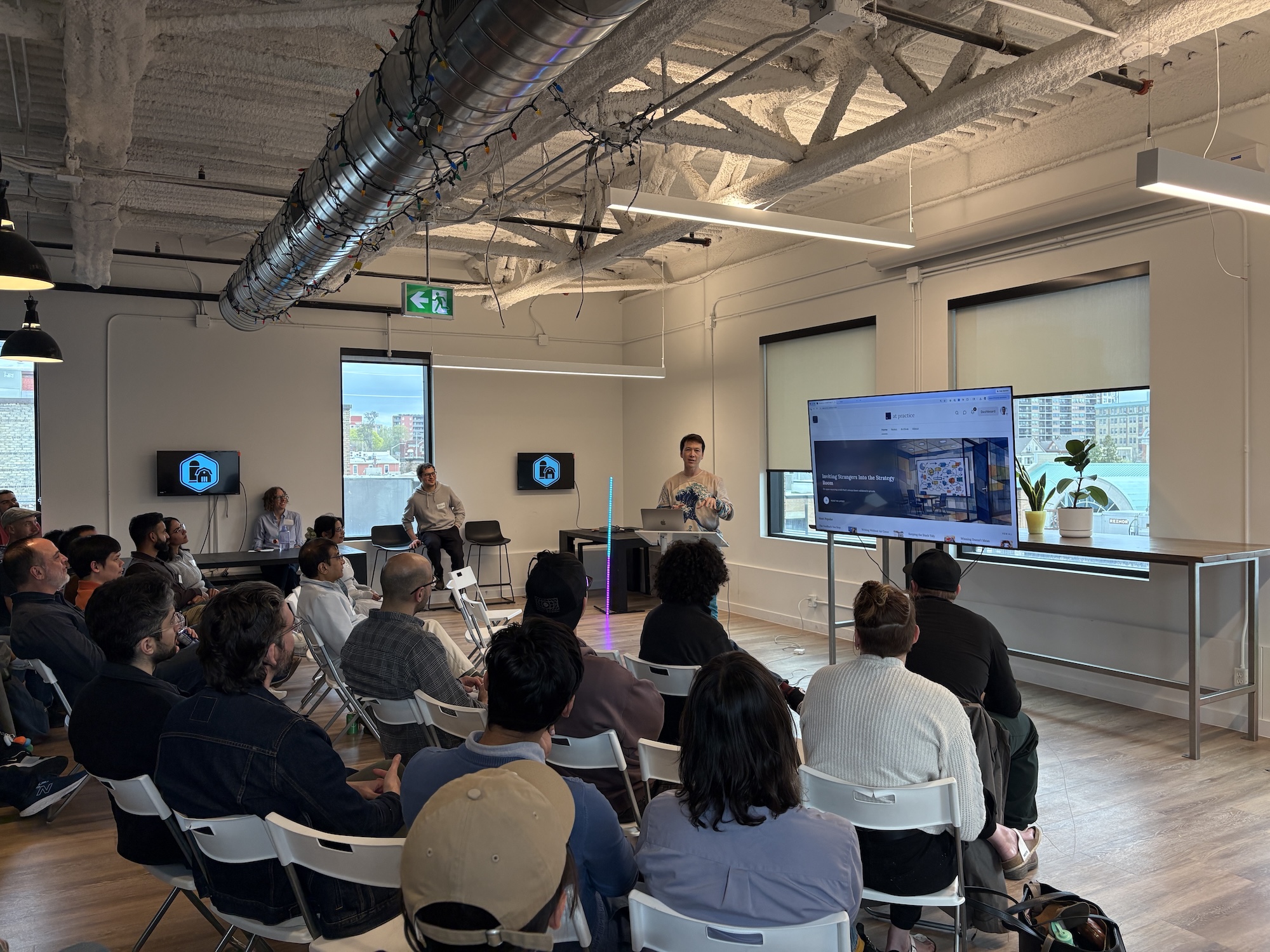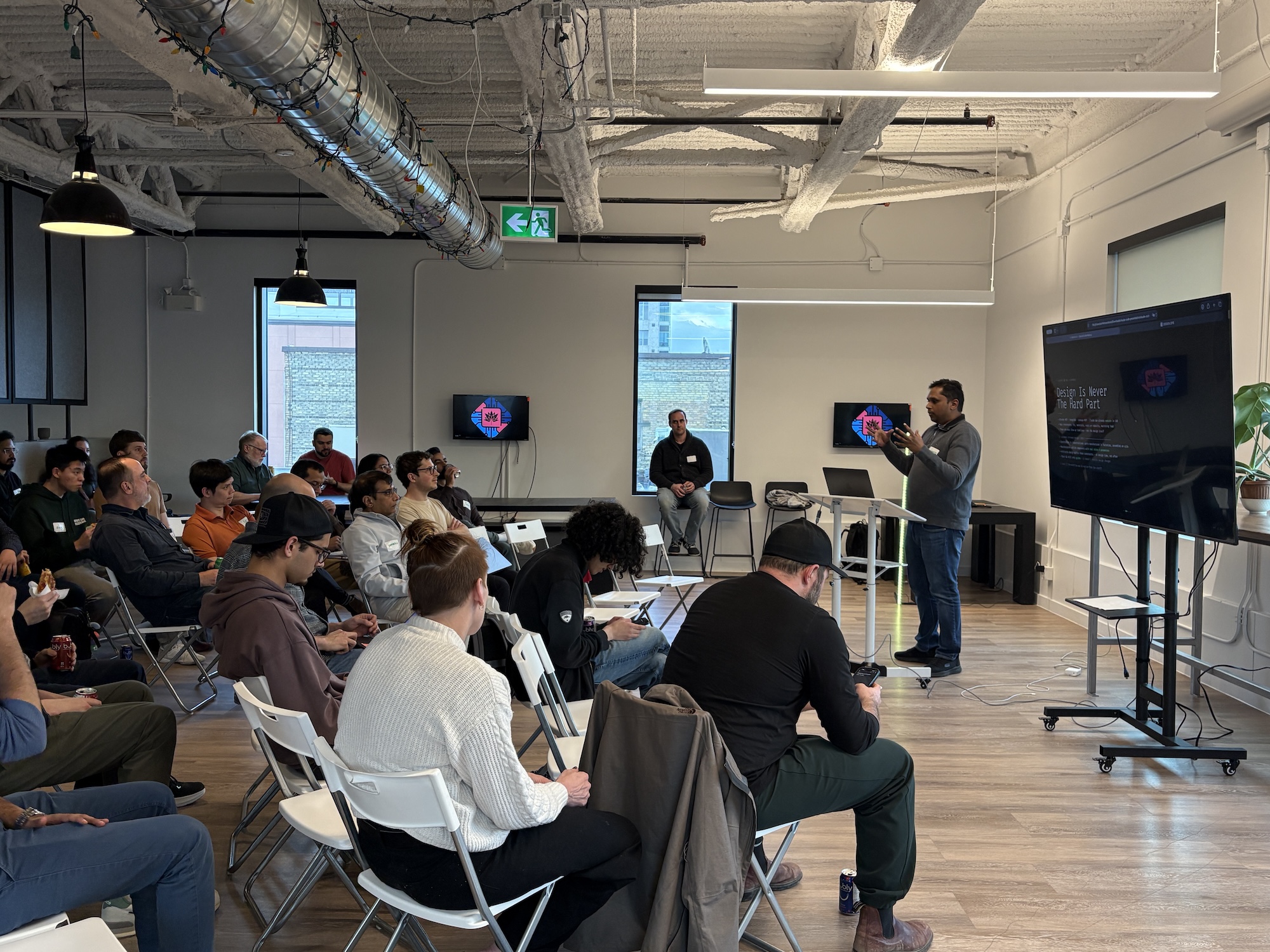
present a demo

Demo at Claude Waterloo.

Amazing. Our demos are the heart of the night, and they work because real people show real things they have actually built or use. This page covers what to expect and how to prepare so you can walk in relaxed and land it.
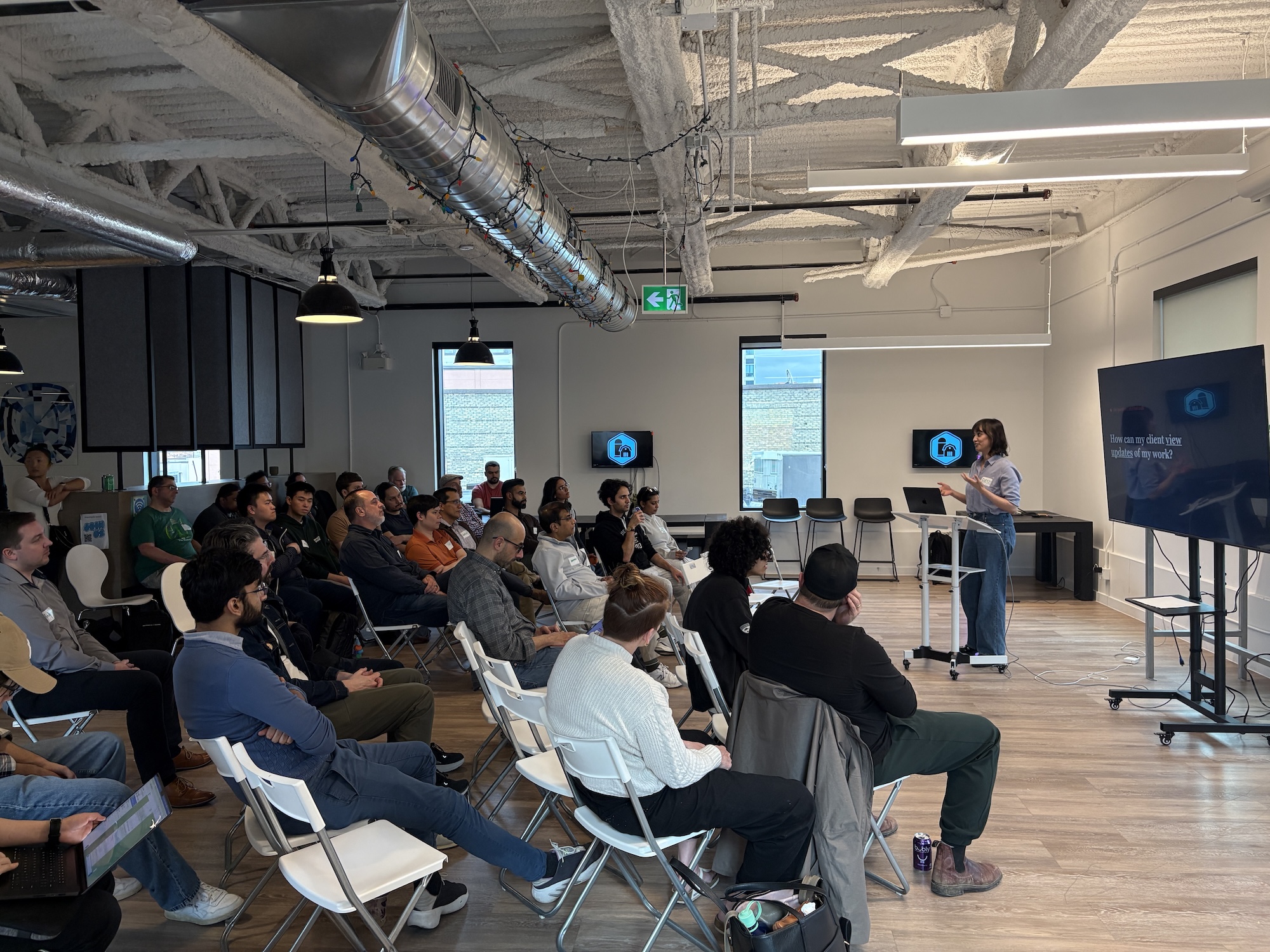
Presenter speaking beside a screen with the Claude logo to a seated audience at a Claude Waterloo meetup
Claude Code for Everyone #03 · Apr 2026
the format

How the night runs.

  • You get 10 minutes to demo, then about 5 minutes of questions. One focused demo, live.
  • Six demos a night, in two rounds of three, with a pizza break in the middle.
  • Round 1 is the accessible round and Round 2 goes deeper, so broadly relatable demos usually go before the break and more technical ones after pizza.
  • Expect questions right after you present. Those 5 minutes are part of the fun, so leave room for them.
  • Exact start time and the full run of show are on the event's Luma page. Plan to arrive during the opening networking window so you have time to set up before the first talk.
Presenter at a standing desk beside the big screen with a full seated audience in a bright loft at a Claude Waterloo meetup
Claude Code for Everyone #03 · Apr 2026
the spirit of it

What this night is about.

  • Sharing, not selling. This is not a pitch stage. The whole point is showing how you actually used Claude so other people can learn from it. Slides are welcome when they help explain an idea, just keep it about the how and the learning, not a product pitch.
  • Come ready for an open conversation. People ask questions for two reasons: to learn from you, and to share how something could be done differently. Treat that as a gift. The best demos turn into the best discussions.
Attendees networking by the windows at Builders Club with the downtown skyline behind them
Claude Code for Business #01 · Mar 2026
what works

What makes a demo land here.

  • Show applied, day-to-day use, not a feature tour. The room consistently asks for how people genuinely get value from Claude, not polished demo-ware.
  • Keep it accessible. The crowd is mixed: seasoned engineers and complete non-developers in the same room. Open in plain language, then go as deep as you like.
  • Tell a story, not a feature list. The demos people remember are end to end: a non-developer running a production app, a live audience-interactive build, a workflow that saves hours. A sticky analogy travels and gets quoted afterward.
  • Both kinds of demo are welcome. Claude Code builds and non-coding Cowork workflows (research, writing, ops, marketing, business decisions) are equally valued. We deliberately balance the lineup across both.
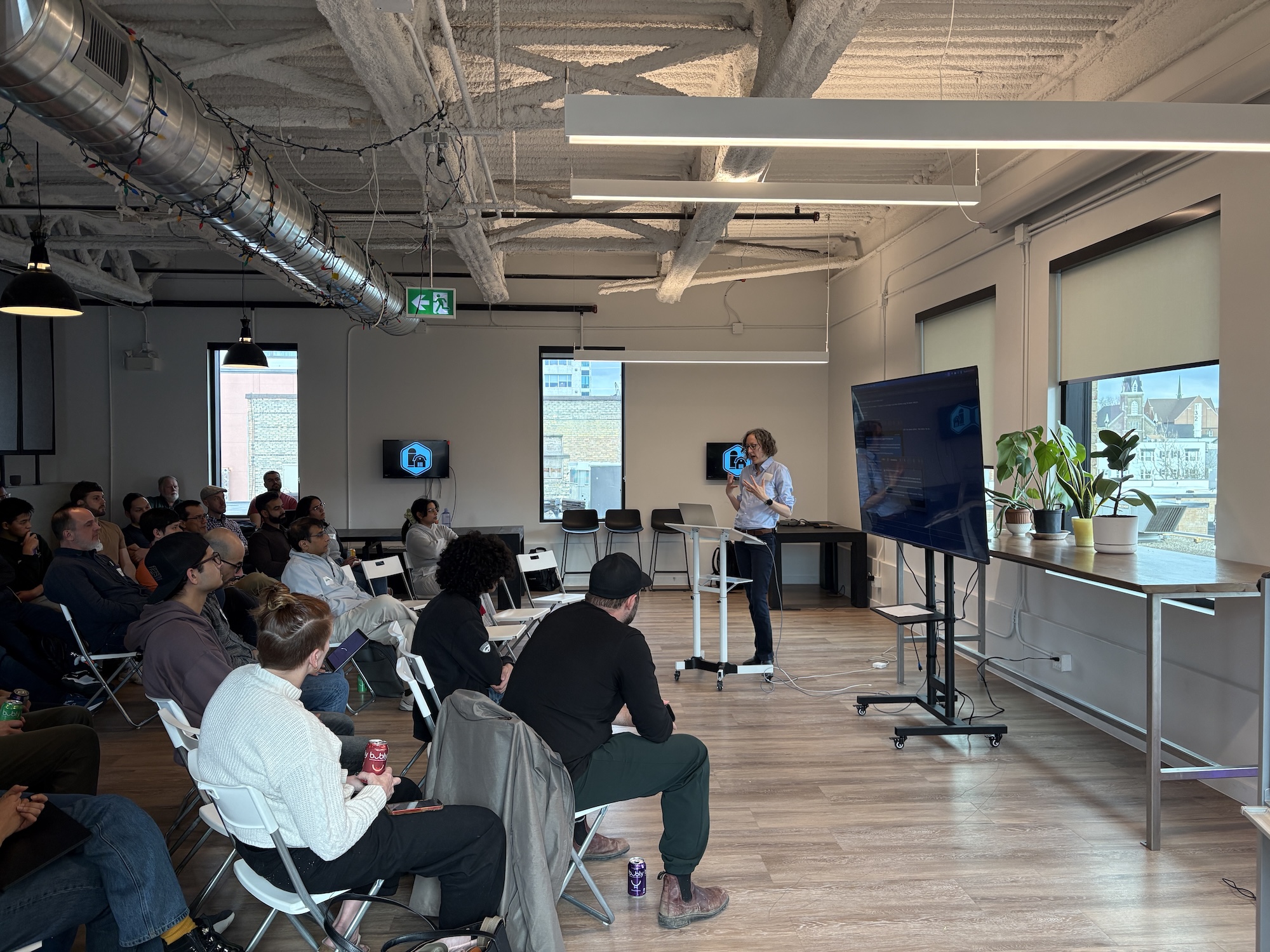
Presenter at the podium running a live demo on the big screen for a seated audience
Claude Code for Everyone #03 · Apr 2026
get ready

How to prepare.

  • It is all live, so pre-stage everything. Have your repo, data, and logins primed before you arrive, and avoid live installs or first-run setup on stage.
  • Rehearse to land inside 10 minutes with a little buffer, then let the questions breathe in the 5 that follow. Running long is the one thing we actively plan around.
  • Bring a few pre-baked screens. If a live Claude run takes longer than expected, having screenshots of the expected output ready keeps your momentum instead of leaving you watching a spinner.
  • Keep generated assets light, for example lower-resolution images, so nothing stalls mid-run.
  • The format is forgiving. If one beat stumbles, the room is with you and the next demo is only minutes away.
Presenter holding up a device next to a screen of terminal output while the audience takes notes
Claude Code for Everyone #03 · Apr 2026
on the night

Tech and logistics.

  • Bring your own laptop and any adapters you might need. We will help you connect and test during the arrivals window.
  • Size up for the room. Your terminal or any Claude surface can look fine on your laptop but be unreadable on the projector. Bump up the font size before you go on, and glance at the big screen during setup to calibrate.
  • Be ready to project your voice. A mic is not guaranteed every event, and it is roughly an 80-person room.
  • Arrive early, during the opening networking window, so you can plug in and test before the room settles.
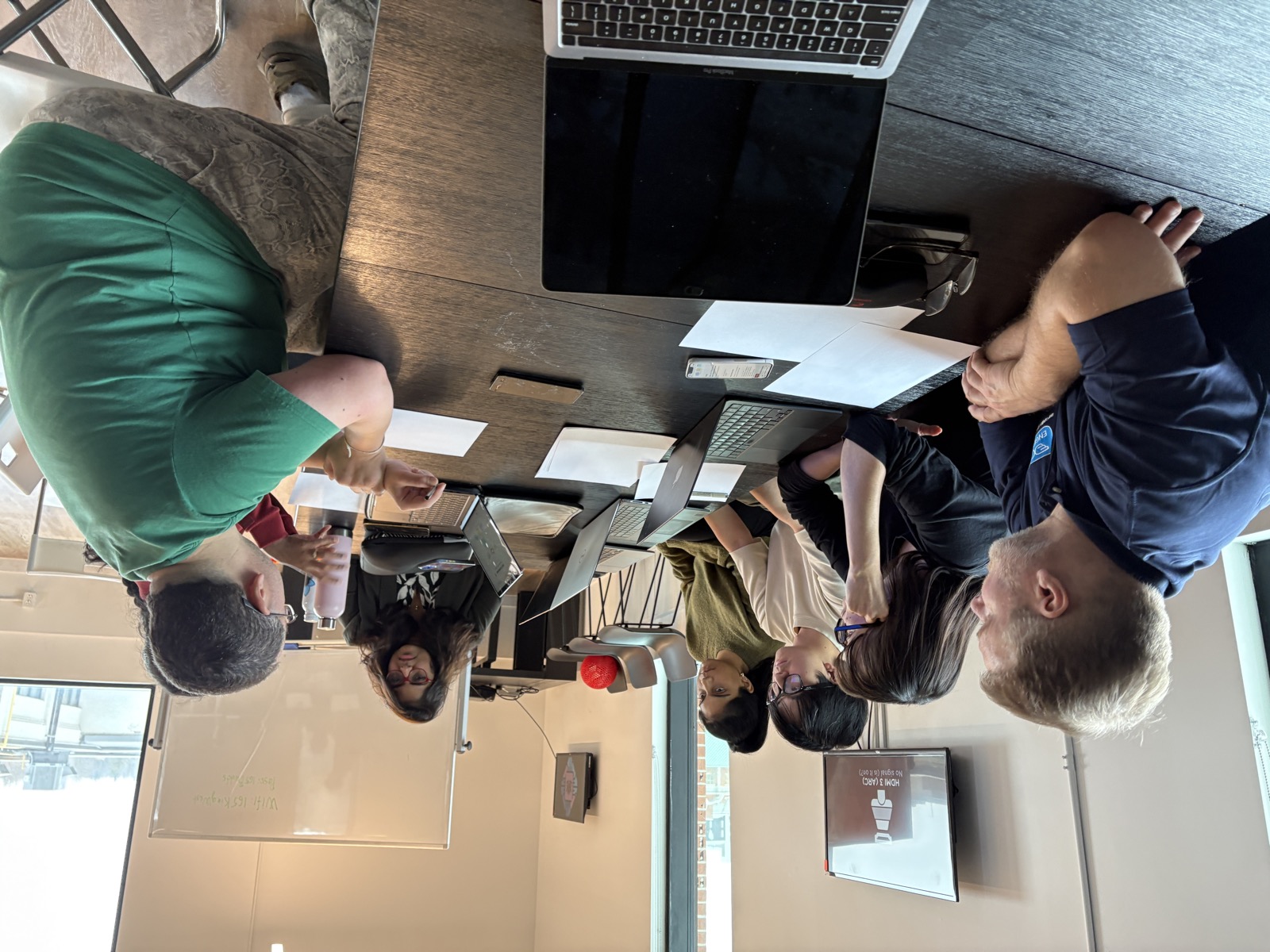
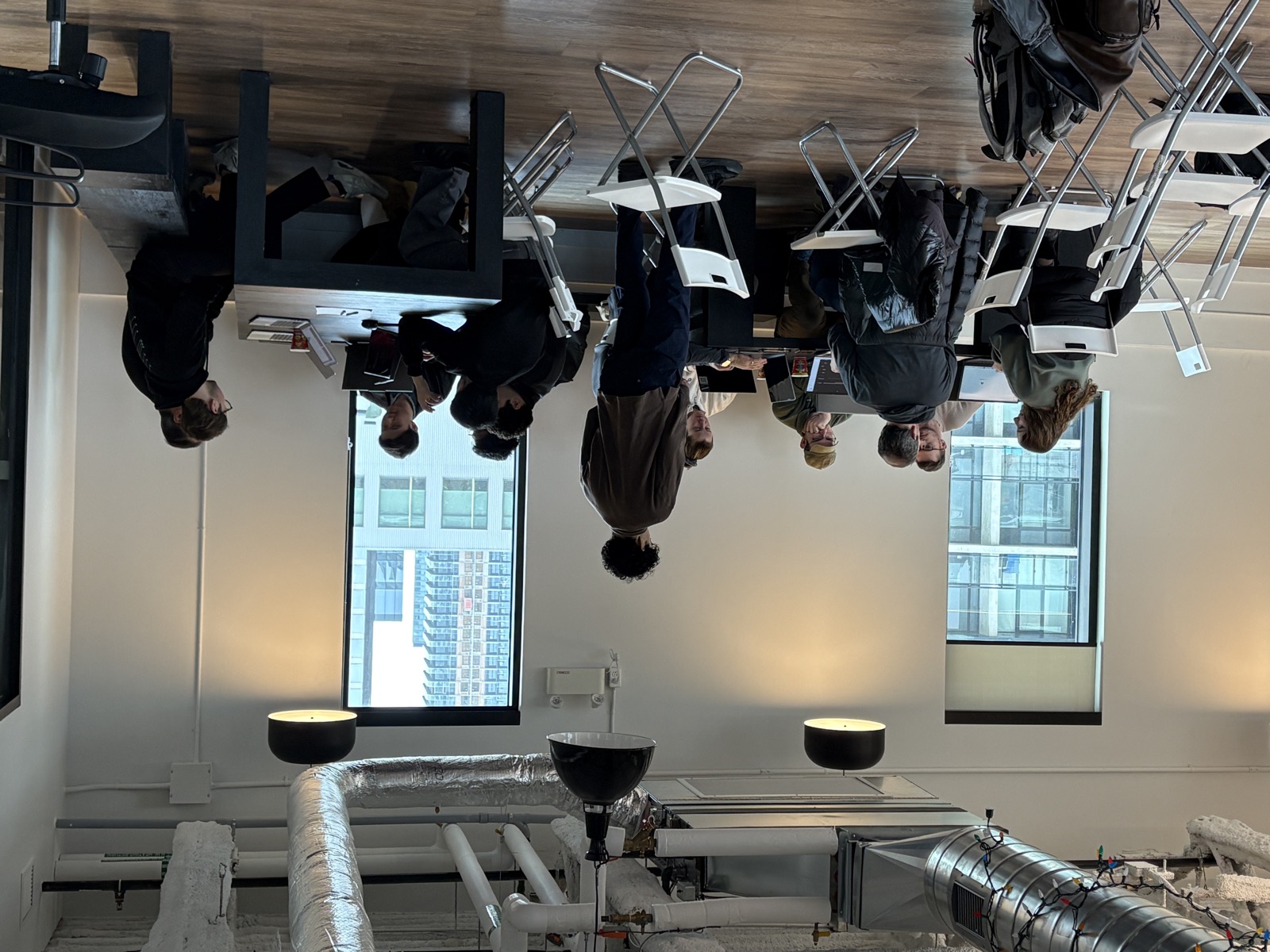
Small group working on laptops around a table during a Claude Waterloo workshop
Claude Code for Business #01 · Mar 2026
the room

Who you'll be talking to.

Expect around 80 to 100 people, a genuine mix from big-tech engineers to founders to students to non-technical business owners, and a high, friendly energy. Many are repeat attendees who have seen past demos, so a fresh angle goes a long way.
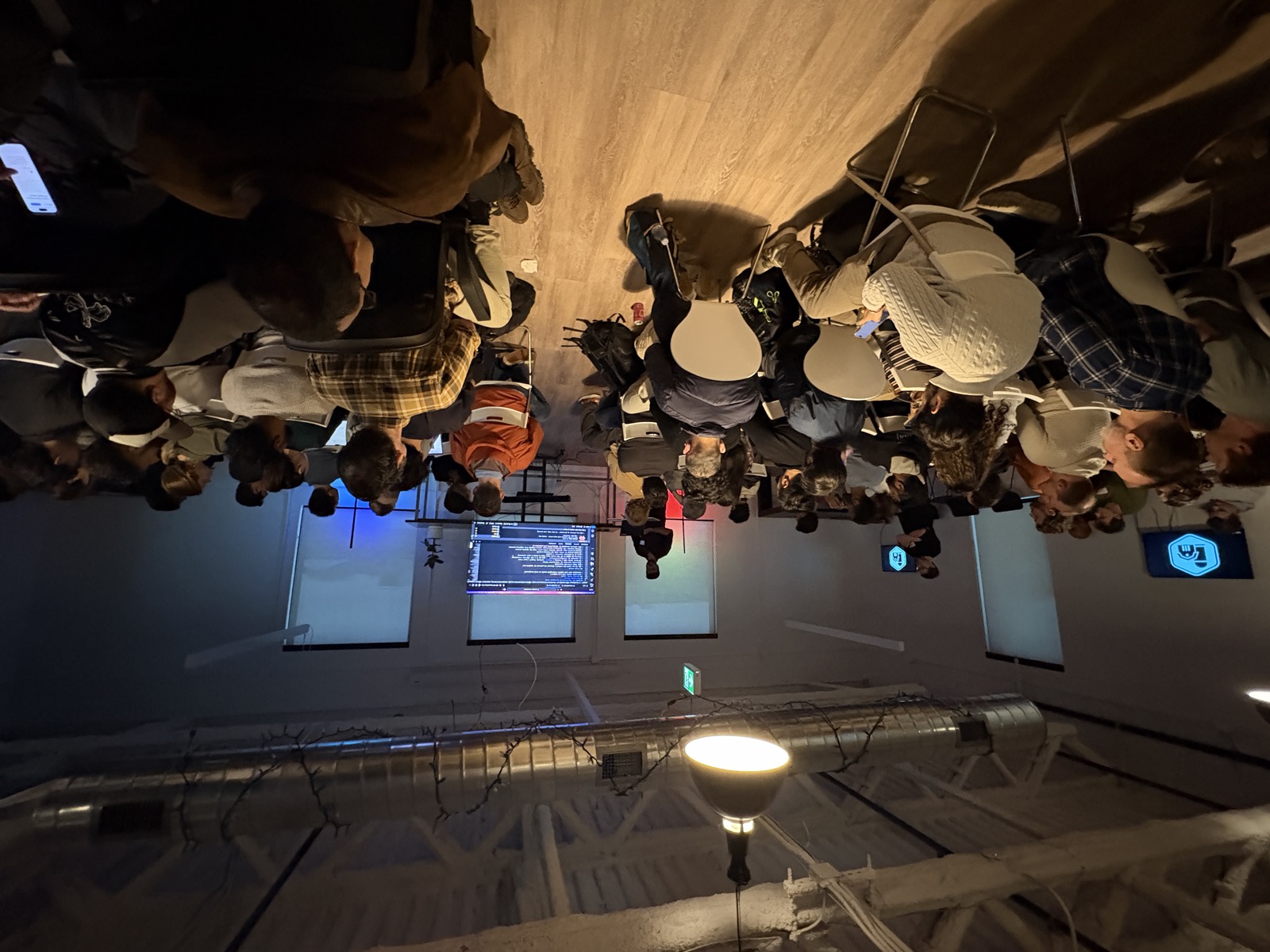
A packed room of around 100 people watching a demo on the far screen
Claude Code for Everyone #02 · Mar 2026
ready?

Tell us what you would show.

Fill out the form below and we will take it from there.

Not loading? Open the form in a new tab ↗